01 · Vision
The fifth revolution
Every industrial revolution answered one question. The first: how do we replace muscle? The second: how do we produce at scale? The third: how do we automate the process? The fourth: how do we connect the machines? Each answer made the factory more productive, and each pushed people a little further out of view.
Industry 4.0 connected the machines, but not the people. Sensors now report every fault to the second. Who fixes it, by which route and under what strain is recorded by no one. Between the machines, people work as they did a hundred years ago: they walk, search and decide alone. In mature industries machine efficiency sits at 94 to 98 percent. The work between the machines is the last large field that has never been measured.
Industry 5.0 puts people back at the centre. The operator becomes part of a system in which people, AI agents and robots work together on one platform. That eases the load on the people who stay, and it prepares the factory for the robots that are coming. That is what our name stands for: one crew of people and machines.
02 · Solution
The platform
Factories have many displays and no platform for the work itself. Machine builders optimise the machine, monitoring systems report the fault. The layer above is missing: who is where right now, who is free, who can do what, and which task matters first. We call it the operator layer.
crewmanity runs operations in real time. Our platform links the fault data of the machines with what is happening on the floor. AI agents assign each task to whoever can complete it fastest and best. Operators no longer search, they are guided. For the first time, the plant sees objectively what the work delivers and what strain it puts on people.
People today, people and robots tomorrow. Humanoids and autonomous units are entering the factory, and they too need someone to tell them where to go. A platform that directs people today will direct robots tomorrow by the same logic, side by side with the workforce. That is why crewmanity is set up as an umbrella brand: one core, with vertical products for each industry on top.
Stage 1
Digital twin of the operator layer
People, routes and responsibilities are mapped digitally.
Established (PoC)
Stage 2
Digital shadow
The system guides and measures during live operation.
Pilots 2027
Stage 3
AI agents
Agents analyse and allocate work within clear limits.
In development
Vision 5.0
Autonomous floor
People, agents and robots work together on one platform.
Platform vision
Each stage produces the data that makes the next one possible. Revenue is a recurring subscription, not a one-off hardware sale.
03 · Timing
Why now?
The technology is ready. Sensing that was too expensive for this purpose a few years ago now costs a fraction. AI models run on the industrial PC on the floor, where the data originates. Agents can plan, assign and act within defined limits.
Labour is getting scarce and expensive. Wages are rising in the classic manufacturing countries, and fewer and fewer people are willing to do shift work in noise and heat. Plants have to stay profitable with fewer staff. Europe went through this in the 1990s; Turkey and Asia are going through it now.
Retrofit beats rebuild. Investment goes into the installed base: fast payback, minimal disruption. We build on existing infrastructure instead of replacing machines.
Proof is becoming mandatory. Supply chain laws and brand owners demand documented working conditions from their suppliers. Whoever runs the operator layer digitally already has that data.
04 · Market and status
First field: the spinning mill
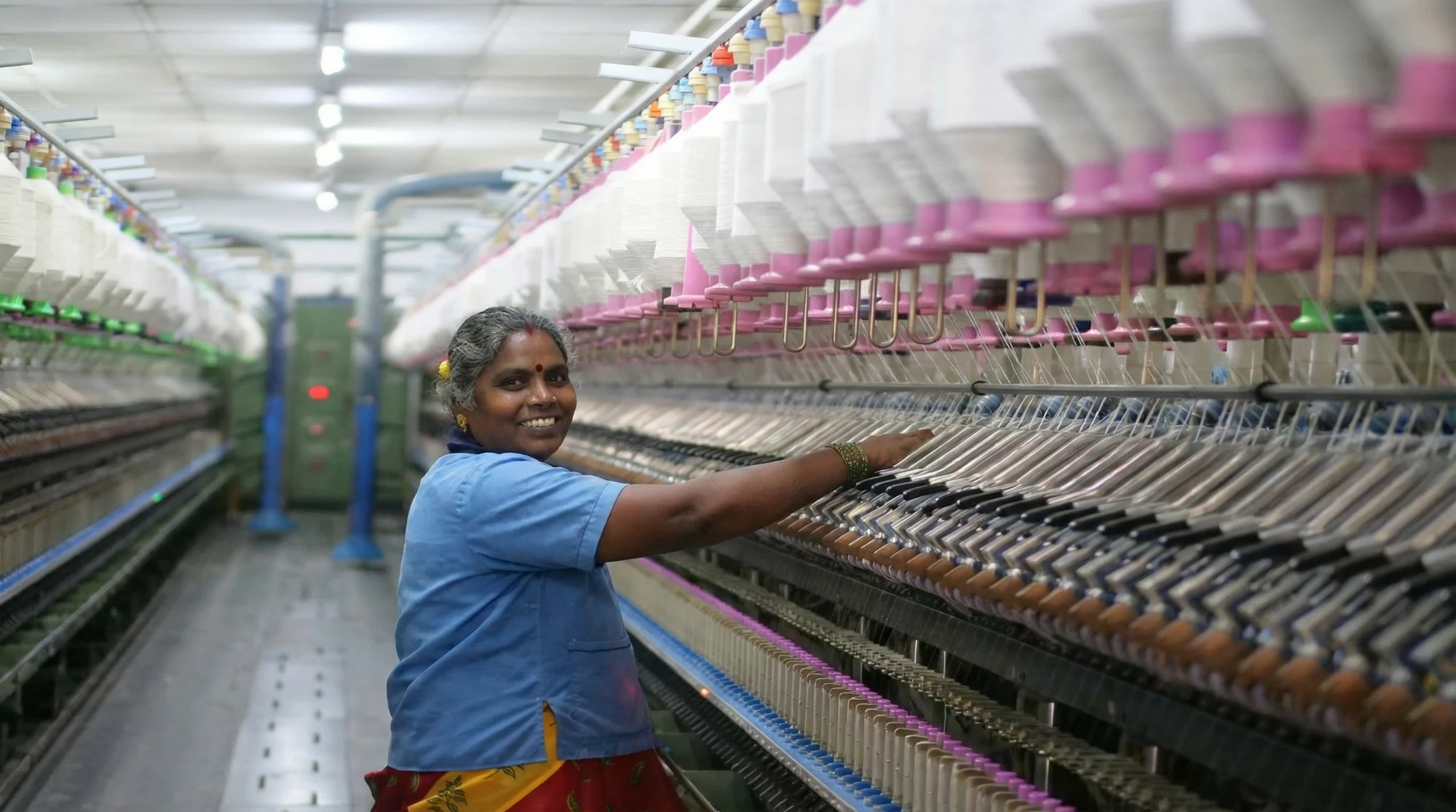
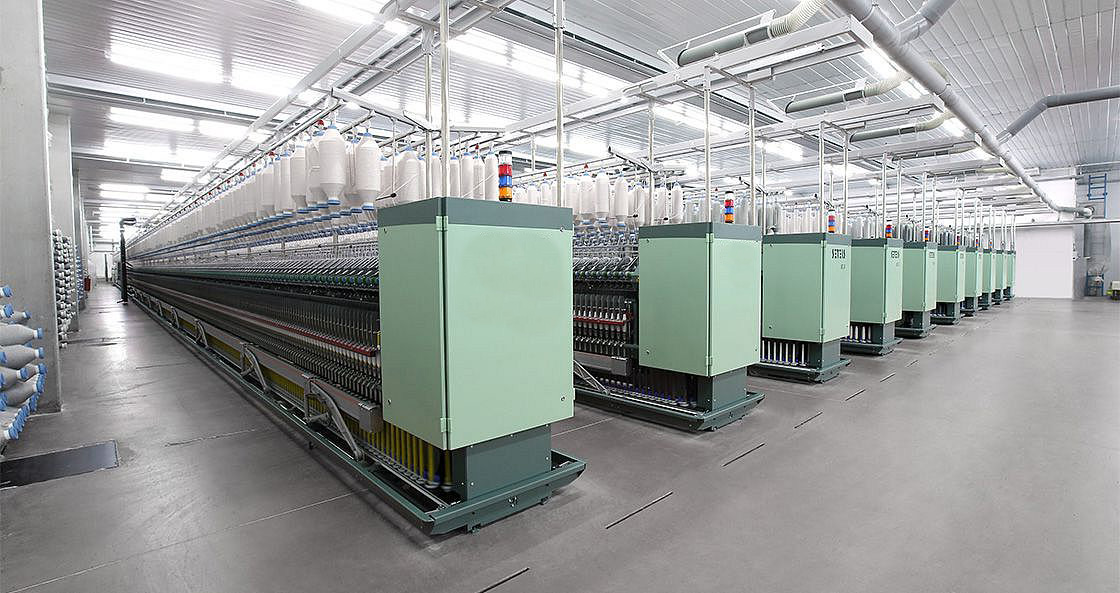
We start where the leverage is greatest. Ring spinning is the most labour-intensive step in the textile chain. Operators still patrol their machines the way they did in 1828, when the ring spindle was patented, looking for broken threads by eye.
272M
ring spindles are installed worldwide
165,000
operators work on spinning floors
~80%
of spindles run without individual monitoring
1828
The working method has been essentially unchanged since then
Spindle base according to Rieter, Annual Report 2023. Operator count and share without monitoring: own estimate.
SPINPILOT is our first product. A live operations solution for ring spinning mills that can be retrofitted to equipment from any manufacturer. The method is covered by a patent application. Patent Pending
Then the next floor. First, further textile process stages such as weaving, winding and spinning preparation. Then industries with the same pattern of many machines, long distances and manual work: foundries, paper, breweries.
- Proof of Concept 2 completedField test · spinning mill in Coimbatore, India · Nov 2026Completed
- Incorporation of crewmanity GmbHCompany · Stockach, Germany · Nov 2026In progress
- Long-term test in live operationTrial 1 · India · from Feb 2027Planned
- Full rollout at the reference millReference · Q3 2027Planned
Founder and Managing Director
Jürgen Plessing
More than 15 years of leadership experience in industrial service and after-sales in machinery. Independent since 2021 with a focus on the textile industry and cotton processing, with direct access to spinning mills and manufacturers in the target markets.